
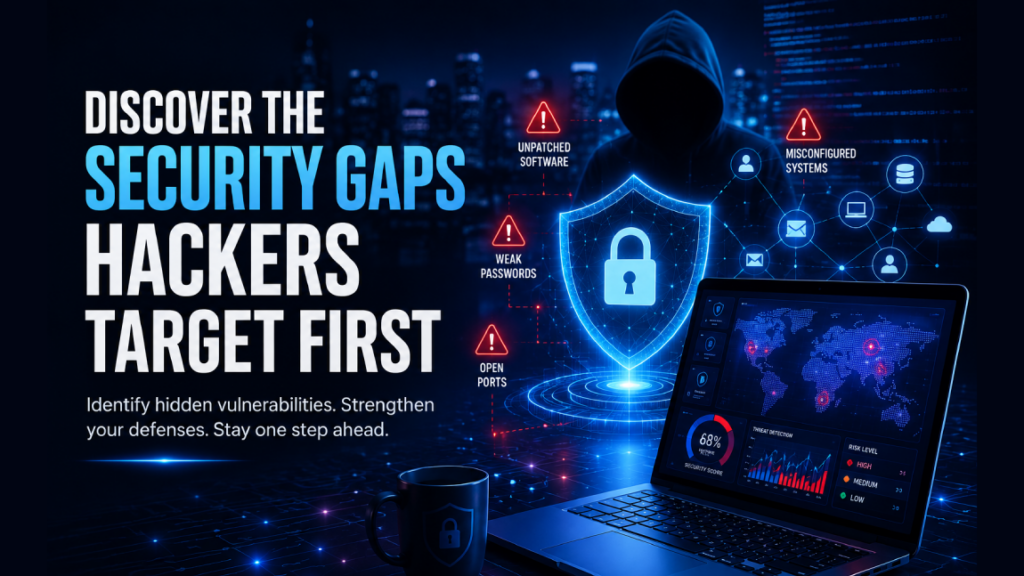
Let’s be real for a second. Cybercriminals aren’t burning weeks trying to crack military-grade encryption to get into your network. They’re just looking for an open window.
Most cyberattacks happen because of simple oversight. Hackers act like digital burglars, running automated scripts across thousands of businesses an hour to find the path of least resistance. Whether your team is based in Manhattan, Queens, or commuting from Newark and Jersey City, attackers are actively probing your perimeter for low-hanging fruit.
Understanding the specific security gaps hackers target first is the best way to harden your defences.
1. Unpatched Software
When a vendor releases a security patch, they are basically telling the world exactly where a system’s weak spot is. Hackers immediately write scripts to hunt down un updated systems. A solid managed IT services company fixes this by using centralized IT infrastructure management. They apply updates behind the scenes during off-hours, closing the door before exploits can take root.
2. Weak Passwords & Missing MFA
Stolen passwords are the easiest way for an attacker to walk right into your network. Bots can test millions of leaked logins against your portals in minutes. You need real cybersecurity services that enforce phishing-resistant MFA across the board. Pairing this with smart access controls stops login attempts from weird devices or locations cold.
3. Misconfigured Cloud Settings
Moving to the cloud is great, but moving too fast leaves security in the dust. A single wrong toggle can expose private company data to the public internet. Partnering with experts in cloud migration services and cloud computing solutions ensures your setup uses strict “least-privilege” rules. Adding managed cloud services means your environment gets scanned constantly to catch and fix misconfigurations automatically.
4. Unsecured Remote Devices
When employees check emails on personal phones or work from coffee shops in Astoria, Williamsburg, or Hoboken, they create unmonitored backdoors. Using strong endpoint security solutions and network security solutions ensures every remote laptop is encrypted and watched. Backed by expert IT support services, you can instantly isolate a compromised device before an infection spreads.
5. Over-Privileged Accounts
If a hacker compromises a basic front-desk account, can they access your payroll data? In a poorly configured network, yes. Good IT infrastructure security relies on network segmentation—splitting your network into isolated zones. Paired with active threat detection and response, any weird internal behavior triggers an immediate lockdown.
6. Untested Backups
Hackers actively hunt for connected backup drives during an attack to destroy your recovery files before demanding a ransom. Enterprise-grade data backup and recovery and data protection services use automated, immutable backups stored locally and in secure cloud computing vaults. Routine recovery drills ensure your systems can be restored in minutes without paying extortionists.
7. Front-End Vulnerabilities
Outdated website software is an easy entry point to harvest customer data. Working with a skilled web development company ensures your public platforms are protected and perfectly synced with your internal scalable cloud solutions and business cloud services.
Talk to Our IT Experts Today
Stop guessing where your vulnerabilities are hiding. Protect your organization with round-the-clock threat monitoring, tailored cloud solutions, and dependable local engineering built for businesses across New York and New Jersey.
👉 Contact Wavestek today to schedule your free security consultation.
Frequently Asked Questions
Q: What is the most common way hackers break into businesses?
A: Phishing emails and stolen passwords are the top entry points, especially when multi-factor authentication (MFA) is missing.
Q: How do managed IT services help prevent data breaches?
A: They monitor your network 24/7, apply automated security patches, and isolate potential threats before any damage occurs.
Q: Why are unpatched systems a major security risk?
A: Once a software flaw is publicly announced, hackers use automated bots to find and exploit unupdated systems within hours.
Q: What makes cloud storage insecure?
A: It becomes vulnerable when default access settings are misconfigured, leaving private company data exposed to the public internet.